

The landscape of human services practice continues to evolve in response to the multifaceted challenges faced by individuals, families, and communities. To meet these growing demands, both undergraduate and graduate human services programs must equip students with the knowledge, skills, and ethical grounding needed to navigate complex systems and promote equity. As professionals working at the intersection of systems and societal needs, human services practitioners are continuously called upon to address not only immediate client concerns but also the broader structural circumstances that shape overall well-being (Carrola & Brown, 2018). Among these conditions, the Social Determinants of Health (SDOH) have emerged as a critical framework for understanding how factors such as housing, education, economic stability, and access to care influence outcomes across the lifespan (Ryu et al., 2021). Preparing future professionals to engage with these systemic realities necessitates a deliberate and ethically grounded approach to higher education. Within this context, the integration of SDOH into human services curricula presents both an opportunity and a responsibility for educators committed to advancing equitable and responsive practice (Ratts et al., 2016).
Social Determinants of Health in Human Services
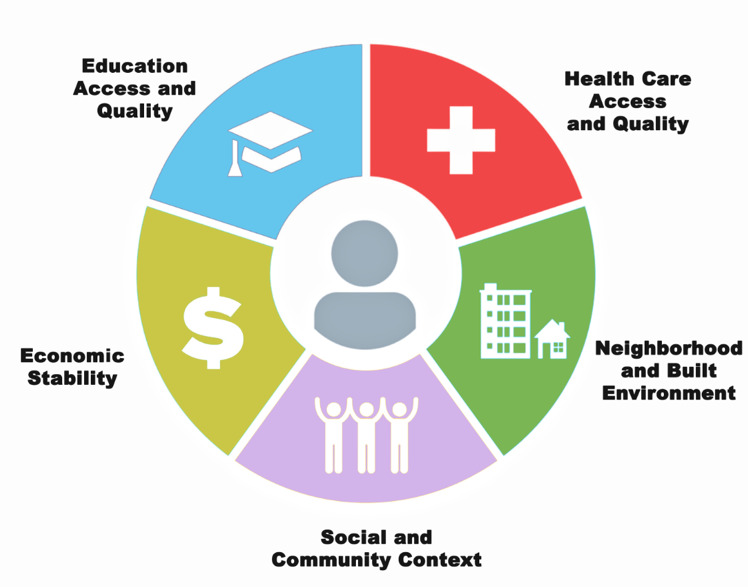
Social Determinants of Health (SDOH) encompass a broad range of social, economic, and environmental conditions that shape individual and community health outcomes (Healthy People, 2030; McGinley et al., 2023; World Health Organization [WHO], 2023). This overarching framework encompasses five domains: Economic stability, access to and quality of education, access to and quality of healthcare, neighborhood and built environment, and social and community context (Healthy People, 2030; McGinley et al., 2023; WHO, 2023). The economic stability domain includes factors such as income, employment, poverty, and food insecurity (Healthy People, 2030). The education access and quality domain includes factors such as level of education, access to quality education, and early childhood education (Healthy People, 2030). The healthcare access and quality domain includes factors such as availability, accessibility, and affordability of health insurance, access to healthcare providers, and quality of care (Healthy People, 2030). The neighborhood and built environment domain includes factors such as housing quality, environmental quality, access to healthy food, transportation, and neighborhood crime rates (Healthy People, 2030). The final domain, social and community context, includes factors like social support, community cohesion, familial structure, and civic engagement (Healthy People, 2030). Together, these domains provide a comprehensive lens for understanding how non-medical factors contribute to disparities in health, well-being, and opportunity. While traditionally emphasized in public health, the SDOH framework has critical relevance for human services professionals, whose work is embedded in the very systems that shape these social conditions (Robins et al., 2021).
In human services, practitioners frequently work with populations disproportionately impacted by these determinants, including individuals and families navigating poverty, systemic racism, housing insecurity, and intergenerational trauma (Bailey et al., 2017; Braveman & Gottlieb, 2014; Robins, 2021; Robins et al., 2021). For this reason, SDOH are not peripheral to human services practice; rather, they are central to it. Professionals in these fields often serve as the front line of support for clients whose presenting concerns are rooted in societal and systemic disadvantage (McGinley et al., 2023). Without training that explicitly addresses SDOH, there is a risk of individualizing problems that are inherently structural, thereby reinforcing inequities rather than challenging them (Johnson & Robins, 2021; Metzl & Hansen, 2014; Robins et al., 2024). As Robins and colleagues argue, integrating SDOH into human services education is essential for preparing ethically and culturally responsive practitioners who understand how macro-level conditions shape micro-level outcomes. Moreover, the National Academies of Sciences, Engineering, and Medicine (2017) emphasize that interdisciplinary professionals, including human services practitioners, must be equipped to identify, assess, and intervene on various societal and systemic determinants to reduce disparities and promote long-term well-being. Embedding SDOH in education not only aligns with ethical imperatives but also strengthens the field’s ability to respond to the growing complexity of societal and systemic needs in practice (McGinley et al., 2023).
Despite the clear relevance of SDOH to human services (Robins et al., 2021), many educational programs have yet to fully integrate this content into their curricula. Rather, historically, the emphasis has been on micro-level intervention strategies that focus on individual factors, often neglecting the broader structural causes and systems of client concerns (Artiga & Hinton, 2019; Bailey et al., 2017; Marmot & Allen, 2014). This limited approach can leave students underprepared to analyze and address the systemic roots of client hardships, particularly in historically marginalized communities where intersecting SDOH are most pronounced (Artiga & Hinton, 2019; Bailey et al., 2017; Marmot & Allen, 2014). For instance, research has noted that without a solid foundation in SDOH, helping professionals may lack the necessary framework to understand and effectively intervene in the complex social and environmental factors impacting their clients’ mental health (Robins et al., 2021). Similarly, research by Sheperis and colleagues (2023) emphasizes the importance of incorporating SDOH into counselor and human services education to adequately equip future practitioners with the competencies required for culturally responsive and socially just practice. Incorporating SDOH content into human services education is not simply a curricular enrichment; rather, it is an essential component of preparing practitioners to navigate the complex, intersecting challenges experienced by diverse and historically oppressed populations (McGinley et al., 2023).
Human Services Education and the Gap in SDOH Integration
While nursing and public health education have made notable strides in integrating SDOH into their curricula (Doobay-Persaud et al., 2019; Martinez et al., 2015), human services education has been slower to adopt this critical content. Robins and colleagues (2022) found that even in fields closely aligned with human services, such as counseling, educators often struggle to balance comprehensive content coverage with the meaningful integration of SDOH. Often, programs will try to squeeze crucial SDOH topics such as access to healthcare and employment into their courses as an afterthought, which is seemingly problematic (Sharma et al., 2018; Siegel et al., 2018). This challenge is further highlighted by Sheperis and colleagues (2023), who advocate for the inclusion of SDOH as a core component of helping professionals’ preparation, emphasizing its role in developing culturally responsive and socially just practitioners. Similarly, the World Health Organization (2023) underscores the necessity of embedding SDOH into health workforce education to effectively address physical and mental health inequities. When educators successfully connect course content to systems of oppression and structural inequities, research indicates that students exhibit increased ethical sensitivity, enhanced advocacy skills, and greater cultural responsiveness (Edyburn et al., 2023; Robins et al., 2022).
Therefore, integrating SDOH into human services education is a vital step toward preparing professionals who are capable of addressing the multifaceted challenges faced by diverse populations (McGinley et al., 2023). These findings provide a valuable model for human services educators seeking to move beyond surface-level diversity content and toward deeper integration of SDOH as both an ethical framework and pedagogical tool (McGinley et al., 2023). Johnson and Robins (2021), for example, highlight how counselor educators experienced positive outcomes when SDOH were explicitly connected to ethical decision-making, critical reflection, and systemic thinking. These outcomes, including greater awareness, stronger advocacy skills, and more nuanced ethical reasoning, are both desirable and necessary within human services and counselor education (Johnson & Robins, 2021).
Ethical Imperatives and the NOHS Standards
The 2024 National Organization for Human Services (NOHS) Ethical Standards provide a timely and robust justification for embedding SDOH within human services curricula. Standard 10 emphasizes the ethical obligation to provide equitable and inclusive services across cultural identities (NOHS, 2024). Standard 14 charges professionals with understanding the impact of social and political issues on client well-being (NOHS, 2024). Standards 15 and 16 go further by mandating that human services professionals identify community needs and advocate for social justice and the elimination of oppression (NOHS, 2024). For educators specifically, Standards 37 through 44 outline expectations for inclusive pedagogy, accessibility in education, and preparing students to practice ethically in complex environments (NOHS, 2024). These ethical mandates make it clear that human services educators have a professional responsibility not only to acknowledge SDOH but to center them within coursework (NOHS, 2024). Moving in this manner will ensure that students can ethically engage with the multifaceted realities of the communities they serve and are prepared to lead systems-level change, not just deliver services (NOHS, 2024).
Pedagogical Strategies for Teaching SDOH in Human Services
To effectively teach SDOH, educators must move beyond content delivery and toward pedagogies that foster reflection, ethical reasoning, and systems thinking (Gadsby & Wilding, 2024). Experiential learning methods, such as service learning, community mapping, and case-based simulations, allow students to examine SDOH as lived realities and ethical challenges (Klein et al., 2011; Martinez et al., 2015). These strategies also align with culturally responsive teaching, emphasizing the importance of acknowledging students’ positionalities and community contexts. Equipping students with ethical decision-making frameworks, such as the ETHIC model (Congress, 2000), enables them to navigate the complexities that arise when client needs intersect with inadequate and historically diminishing systems (Klein et al., 2011; Martinez et al., 2015). Thus, providing students with the increased ability to identify dilemmas not only at the client level but also at the organizational, community, and policy levels will develop the ethical confidence and professional clarity needed to engage in multiple levels of advocacy (Klein et al., 2011; Ratts et al., 2016).
A Call for Curricular Innovation in Human Services Programs
Given the changing demands of the field and the evolving definition of ethical competence, integrating SDOH content into human services education is no longer optional; it is crucial (NOHS, 2024; WHO, 2023). A dedicated elective course on SDOH would provide a focused space to link theory, ethics, and practice in a way that prepares students for real-world, justice-oriented professional roles. Moreover, integrating SDOH content into the curriculum advances key programmatic goals, including developing cultural humility, interprofessional collaboration, and applied ethical reasoning (McGinley et al., 2023; Ratts et al., 2016; Van Liew et al., 2024). This inclusion also aligns with core competencies sought by field placement sites, graduate programs, and employers, enhancing students’ preparedness for ethically complex, real-world practice (McGinley et al., 2023; NOHS, 2024; Ratts et al., 2016; Van Liew et al., 2024). By explicitly linking SDOH to the NOHS Codes of Ethics and drawing on best practices from related disciplines, human services educators can cultivate practitioners who are not only aware of systemic inequities but also equipped to confront and address them with ethical clarity and professional confidence (McGinley et al., 2023; NOHS, 2024; Ratts et al., 2016; Van Liew et al., 2024).
Theoretical Framework
The design of the proposed elective is informed by a multidimensional theoretical framework grounded in ethical practice, structural analysis, and transformative education. Central to this framework is the SDOH model, which positions factors such as economic stability, food security, healthcare access and quality, environmental safety, and social support networks as fundamental to individual and community well-being (Healthy People, 2030; McGinley et al., 2023; WHO, 2023). These interrelated conditions collectively shape opportunities for health, development, and long-term outcomes, making them essential considerations in ethical and culturally responsive human services practices (Healthy People, 2030; McGinley et al., 2023; WHO, 2023). In human services, these structural conditions are not ancillary; rather, they represent core ethical concerns that demand purposeful integration into both pedagogy and professional practice (Carrola & Brown, 2018; McGinley et al., 2023; Van Liew et al., 2024).
This framework is further shaped by the 2024 NOHS Ethical Standards, which emphasize advocacy for social justice (Standard 16), identification of systemic barriers (Standard 15), and educator responsibility for inclusive, ethically grounded instruction (Standards 37–44). Embedding SDOH content into ethics education directly supports these mandates by fostering student awareness, cultural responsiveness, and readiness to engage in systemic advocacy (Johnson & Robins, 2021; WHO, 2023). By integrating these standards into course objectives and learning activities, educators reinforce the profession’s commitment to equity, justice, and ethical responsibility (Johnson & Robins, 2021; WHO, 2023). This alignment not only prepares students to meet the ethical expectations of the field but also encourages them to view social justice as a professional obligation rather than an optional value (Johnson & Robins, 2021; Ratts et al., 2016; WHO, 2023). In doing so, programs can cultivate practitioners who are both ethically grounded, culturally responsive, and structurally informed, capable of navigating the complexities of human services in diverse and dynamic communities (Johnson & Robins, 2021; McGinley et al., 2023; Ratts et al., 2016; Van Liew et al., 2024; WHO, 2023).
Preparing human services students to effectively engage with SDOH requires a pedagogical approach rooted in critical and systems-oriented frameworks (McGinley et al., 2023; Van Liew et al., 2024; WHO, 2023). Transformative learning theory emphasizes critical self-reflection and the reexamination of personal assumptions, encouraging students to realign their professional identities with equity-centered values (Mezirow, 2018). Complementing this, Freire’s (1970) critical pedagogy frames education as a liberatory practice, prompting learners to interrogate power structures and assume active roles in promoting social justice (Shih, 2018). Structural competency further enhances this foundation by shifting focus from individual-level cultural awareness to the institutional and systemic forces, such as policies, economics, and organizational practices, that perpetuate inequities (Chun & Evans, 2016; Fisher-Borne & Brown, 2018; Metzl & Hansen, 2014). Together, these frameworks prepare students to move beyond traditional client-centered models and develop the skills necessary to advocate for systemic change and address the root causes of disparities impacting the communities they serve.
Course Design: Ethics, Advocacy, and SDOH
As the human services profession competes with increasingly complex sociopolitical landscapes, educators face a pedagogical imperative to equip students with the tools necessary for ethically grounded, equity-oriented practice (Ratts et al., 2016; Sheperis et al., 2023). Traditional human services curricula have often privileged micro-level interventions at the expense of systems-level analysis, inadvertently neglecting the broader structural conditions that shape client well-being (Van Liew et al., 2024; WHO, 2023). In contrast, contemporary frameworks, including the SDOH model, demand that practitioners be prepared to recognize, critique, and respond to the social, economic, and systemic forces influencing health and opportunity (Sheperis et al., 2023; WHO, 2023). Embedding these frameworks within coursework is more than a theoretical exercise; it produces measurable outcomes. For example, Gantt-Howrey et al. (2024) found that counselor trainees who engaged in a fieldwork course focused on SDOH demonstrated increased competence in addressing systemic issues, ethical reasoning, and advocacy readiness.
Centering SDOH in ethics education marks a foundational evolution in preparing practitioners, aligning curriculum with the realities of systemic injustice and the ethical mandates of the profession. The 2024 NOHS Ethical Standards emphasize advocacy, cultural responsiveness, and educator accountability, all priorities that are directly supported by SDOH-informed pedagogy (NOHS, 2024). When human services educators deliberately integrate SDOH into the design of ethics and advocacy courses, they not only align with best practices across health and counseling disciplines but also cultivate a new generation of professionals equipped with the ethical clarity and systems-awareness necessary to confront and address inequity at multiple levels (Gantt-Howrey et al., 2024; Van Liew et al., 2024; WHO, 2023).
Sample Module Content
The Ethics, Advocacy, and the Social Determinants of Health course is conceptualized as a three-credit elective tailored for advanced undergraduate and graduate students in human services. Designed to bridge theoretical knowledge and applied ethical reasoning, the course provides students with a critical lens for understanding structural inequity and their role as ethical advocates within and beyond service delivery systems. Framed through six interconnected learning modules, the curriculum combines interdisciplinary scholarship, experiential learning, and reflective practice. Each module is described in detail below, illustrating how the course scaffolds ethical engagement with SDOH across domains of theory, identity, access, advocacy, technology, and applied action. This course is designed for advanced undergraduate and graduate students in human services programs. While the foundational content is applicable across levels, assignments and learning outcomes are differentiated to match the developmental stages and academic preparation of learners.
Module 1: Foundations of SDOH and Ethical Practice
This beginning module will introduce students to the core concepts of SDOH and connect them to the ethical frameworks outlined in the 2024 NOHS Code of Ethics. Students will explore how systems of power, privilege, and structural inequality influence access to essential resources such as housing, education, healthcare, and transportation, and examine how these inequities manifest in client and community well-being. The module will emphasize NOHS (2024) Standard 14 (i.e., understanding the effects of social and political issues on client well-being), Standard 15 (i.e., identifying and building upon client and community needs and assets), and Standard 16 (i.e., advocating for social justice and dismantling oppression). Additional focus will be placed on Standards 10 and 11, which guide practitioners in providing inclusive, culturally responsive, and equitable services. By critically engaging with these ethical principles early in the course, students will build a foundation for examining professional integrity, systemic advocacy, and their responsibilities as ethically grounded human services professionals.
Module 2: Cultural Humility and Intersectionality
In this module, students will develop a deeper understanding of how SDOH are experienced through intersecting identities, including race, ethnicity, gender, socioeconomic status, disability, and immigration status. The principles of cultural humility will be emphasized as an ongoing ethical stance rather than a checklist of competencies, encouraging students to approach their work with openness, reflexivity, and a commitment to continual learning. Students will engage in structured reflection on their positionality and examine how implicit biases, cultural assumptions, and privilege may influence service delivery and ethical decision-making. This module directly aligns with NOHS (2024) Standard 10 (i.e., providing culturally competent, respectful, and equitable services across diverse populations), Standard 11 (i.e., understanding the impact of oppression and discrimination on client functioning), and Standard 38 (i.e., developing curriculum that incorporates multicultural perspectives). Through this ethical lens, students will be better prepared to engage responsibly and responsively with diverse client communities.
Module 3: The Ethics of Access: Education, Housing, and Transportation
This module will explore the five critical SDOH domains and examine their ethical implications for human services. Using real-world case studies, students will analyze how barriers in these areas contribute to systemic cycles of poverty, trauma, and marginalization, particularly for historically underserved populations. Class discussions will emphasize ethical decision-making frameworks and the role of helping professionals identify inequities and advocate for accessible, just, and sustainable systems of support. This module aligns closely with NOHS (2024) Standard 13 (i.e., remaining informed about issues that affect client and community well-being), Standard 15 (i.e., identifying and building upon client and community needs and assets), and Standard 16 (i.e., advocating for social justice and working to dismantle systems of oppression). By examining ethical dilemmas related to access, students will strengthen their ability to engage in community-level advocacy and systems-informed service planning (Ratts et al., 2016; WHO, 2023).
Module 4: Policy and Advocacy for Systemic Change
In this module, students will be introduced to local, state, and federal policy structures that shape access to resources and influence human services delivery. Emphasizing the ethical imperative to move beyond individual-level interventions, the module focuses on cultivating skills in systems-level advocacy, policy literacy, and ethical leadership. Students will explore advocacy strategies, stakeholder analysis, and coalition-building while critically evaluating the ethical responsibilities and boundaries associated with influencing public policy. This module aligns strongly with NOHS (2024) Standard 15 (i.e., identifying and building upon client and community needs and assets), Standard 16 (i.e., advocating for social justice and dismantling systems of oppression), and Standard 44 (i.e., preparing students to practice ethically and engage in advocacy efforts that support client well-being). Through these applied ethics lenses, students will learn to assess power dynamics, elevate marginalized voices, and promote policies that align with human dignity and social equity.
Module 5: Technology and the Digital Divide
This module explores the digital divide as a contemporary manifestation of structural inequity that intersects with nearly every domain of the SDOH. Students will investigate how disparities in digital access affect service delivery, particularly in rural, low-income, and historically marginalized communities. Topics will include telehealth, virtual counseling, remote education, and online resource navigation, focusing on identifying barriers to access and proposing ethical responses. Students will critically analyze ethical challenges related to confidentiality, informed consent, digital literacy, and the equitable distribution of services in technology-mediated environments. This module supports NOHS (2024) Standard 11 (i.e., understanding how oppression and systemic inequity impact clients), Standard 38 (i.e., incorporating relevant ethical and multicultural content into instructional practice), and Standard 44 (i.e., preparing students to ethically engage with evolving service contexts, including digital platforms). By addressing digital exclusion as an ethical issue, students will gain tools to promote digital equity and ensure inclusive, culturally responsive service delivery in an increasingly virtual world (Jakobsen, 2024).
Module 6: Community-Based Ethical Advocacy Plan
This final module serves as the culminating experience of the course, allowing students to integrate and apply knowledge gained across all prior modules. Students will identify a community need or gap related to one or more SDOH domains and develop a realistic, ethically grounded advocacy proposal. Each project must align with at least three NOHS (2024) Ethical Standards and demonstrate cultural responsiveness, stakeholder collaboration, and systems-level thinking. Proposals may include campus-based initiatives, local partnerships, program design, or legislative advocacy strategies. This module directly reinforces NOHS (2024) Standard 13 (i.e., staying informed on client and community issues), Standard 15 (i.e., identifying and building upon community needs and strengths), Standard 16 (i.e., advocating for social justice and dismantling systemic barriers), and Standard 44 (i.e., preparing students for ethical, advocacy-informed professional practice). Through this applied project, students will be challenged to move from ethical awareness to actionable change, building the professional clarity and confidence needed to advocate effectively in real-world human services settings.
To provide an at-a-glance summary of the course structure, Table 1 presents a concise overview of the six modules, highlighting their focus areas and the corresponding NOHS (2024) Ethical Standards they reinforce.
Sample Assignments and Assessment Strategies
To support deep engagement with the ethical dimensions of the Social Determinants of Health (SDOH), this course will include a range of formative and summative assessments that prioritize critical reflection, systems thinking, and applied advocacy. These assessment strategies are central to effective teaching and learning, providing students with opportunities to build competence over time and demonstrate growth in ethically grounded, socially responsive practice (Simonson et al., 2021). Assignments will be intentionally designed to promote the integration of theoretical knowledge, ethical reasoning, and culturally responsive practice, while reinforcing reflection as a pathway to transformative learning (Mezirow, 1997).
Each assessment will align with specific standards from the National Organization for Human Services (NOHS, 2024), encouraging students to examine their professional responsibilities through the lens of equity and justice. These activities will not only deepen ethical content knowledge but also foster students’ confidence in navigating real-world ethical dilemmas. Through iterative reflection and practice-based learning, students will be empowered to move from awareness to action in their future roles as human services professionals.
Weekly Critical Reflection Journals
Weekly critical reflection journals will provide students with structured opportunities to respond to readings, discussions, and current events related to SDOH. These journals will require students to articulate ethical tensions posed by structural inequities and connect course themes to standards such as NOHS (2024) Standard 10 (culturally competent practice), Standard 14 (understanding the impact of social and political issues on clients), and Standard 16 (advocacy for social justice). Students will also reflect on their own values and positionalities, supporting the development of self-awareness and cultural humility as ethical practices. By regularly engaging in personal and professional reflection, students will begin to internalize advocacy and inclusivity as core components of ethical conduct (Asghar & Rowe, 2016).
Community Resource Mapping Project
In the community resource mapping project, students will select a specific population or geographic community and assess the availability of services related to one or more SDOH domains. They will analyze the implications of resource disparities and propose strategies for ethically engaging or advocating on behalf of affected groups. This assignment aligns with NOHS (2024) Standards 13 and 15, as students learn to stay informed on community issues and identify local assets and gaps. Students will also examine how systemic injustice manifests spatially and develop action plans that reflect ethical responsiveness and respect for community voices.
Case Study Ethical Analysis
The case study ethical analysis, using the ETHIC decision-making model (Congress, 2000), will provide students with a practical framework for navigating complex ethical dilemmas that arise in scenarios involving structural barriers such as underfunded schools, housing instability, or inaccessible healthcare. This exercise reinforces students’ ability to balance advocacy and professional boundaries while identifying ethically justifiable courses of action. Students will map each element of the case to the NOHS (2024) Code, such as Standard 12 (protecting the integrity of the helping relationship) and Standard 16 (systemic advocacy), and reflect on the interplay between client rights and system-level constraints. This assignment supports the development of nuanced ethical reasoning grounded in both professional values and social context.
Digital Equity Audit
In the digital equity audit, students will work in small groups to assess how human services agencies, school districts, or community organizations use technology in ways that either promote or hinder equitable service delivery. Students will evaluate digital access, confidentiality, service inclusion, and infrastructure support, with reference to NOHS (2024) Standards 11, 38, and 44, emphasizing understanding the impact of oppression, inclusive teaching practices, and preparing students to practice ethically in evolving service contexts. By applying ethical principles to real-world digital challenges, such as gaps in telehealth access or barriers to virtual learning, students will build their capacity for ethical decision-making in technologically mediated environments (Jakobsen, 2024; NOHS, 2024).
Final Project: Community-Based Ethical Advocacy Plan
The final project, a community-based ethical advocacy plan, will serve as the course’s capstone assignment. Students will identify a community need influenced by SDOH and propose a feasible, ethically grounded intervention. Plans may focus on campus-based programming, nonprofit partnerships, public policy initiatives, or interagency collaboration. Each project must align with at least three NOHS (2024) Ethical Standards, such as Standards 15, 16, and 44, demonstrating a commitment to social justice, ethical advocacy, and applied systems thinking. Students will present their proposals to peers for feedback and engage in structured reflection on the practical and ethical implications of their strategies. The assignment provides students with a tangible opportunity to demonstrate how ethics, structural competence, and cultural responsiveness can converge in the service of community well-being.
Case Study: Ethical Advocacy Across Zip Codes
Mariah is a senior undergraduate student in a human services program, completing her practicum at a community-based nonprofit serving youth and families in an economically marginalized section of the city. Her role involves supporting young clients with school engagement, family outreach, and access to local resources. One of her clients, Elijah, is a 16-year-old high school student who has been chronically absent for over a month. In a routine check-in, Elijah reveals that he and his mother were evicted after she lost her job. They have been living in their car while trying to secure temporary shelter, but local services are overwhelmed, and most require referrals or documentation that Elijah’s family cannot easily provide. Mariah attempts to identify alternative supports through the agency, but finds the local district’s services to be limited, fragmented, and difficult to navigate. Elijah’s school lacks a dedicated social worker or housing liaison, and no flexible learning options or transportation support exist for students experiencing homelessness. Elijah has become withdrawn, disconnected from peers, and increasingly discouraged about finishing high school. In trying to locate additional services, Mariah learns about a neighboring school district only a few miles away that has significantly more robust support structures for unhoused students. That district offers bus transportation regardless of housing status, access to academic tutors trained in trauma-informed care, flexible attendance accommodations, and a school-based family resource center. Elijah, however, is not zoned for this district, and cross-district enrollment is not permitted without a permanent address.
Mariah begins to wrestle with the ethical implications of this stark contrast. Should she raise her concerns with the local school district, knowing she is only a student intern and not an employee? Should she advocate for policy change or find a workaround to connect Elijah with better services, even if doing so risks violating agency protocols or blurring professional boundaries? She is aware of the ethical standards she is expected to uphold, but she also feels complicit in a system that is failing a vulnerable client.
Ethical Analysis
This case illustrates a multifaceted ethical dilemma deeply rooted in systemic inequity, specifically the geographic disparities in educational and social support for students experiencing housing instability. Mariah must consider her professional responsibilities to Elijah, the limitations of her role within the agency, and her broader obligations to challenge systemic injustice. Students are invited to analyze this scenario using the ETHIC model (Congress, 2000), which guides ethical decision-making by considering core values, potential harms, responsibilities, and feasible alternatives. They are prompted to examine the case through the lens of the NOHS (2024) Ethical Standards, particularly: Standard 13 (i.e., stay informed about issues that affect clients and communities); Standard 15 (i.e., identify and build upon client and community needs and assets); and Standard 16 (i.e., advocate for social justice and dismantle systems of oppression).
In the classroom, this case is used to foster rich discussion about the boundaries of advocacy, the ethical tension between institutional loyalty and client-centered justice, and the real-world barriers that human services professionals may face when attempting to act according to their values. Students engage in role-plays of conversations with supervisors, write reflective analyses of potential actions and consequences, and develop written advocacy plans that explore ethically sound strategies for addressing systemic gaps, both within and beyond the scope of their professional roles.
This case reinforces the broader theme of the course: that ethical practice in human services must be responsive not only to client needs but also to the structural realities that shape those needs. It encourages students to see ethics not simply as a set of rules but as a framework for critical engagement, cultural humility, and purposeful advocacy.
Discussion
Ethical Complexity in Practice
The case study involving Mariah and Elijah reflects the multifaceted ethical dilemmas human services students increasingly encounter. As future professionals, students are often placed in environments where social inequities such as housing instability, limited educational support, and systemic underfunding shape client outcomes in ways that exceed the scope of traditional direct services. Mariah’s situation illustrates the conflict between adhering to agency boundaries and fulfilling an ethical responsibility to advocate for her client’s well-being. These dilemmas underscore the reality that human services practice does not occur in a vacuum; it is shaped by the broader social, political, and economic contexts in which clients live (Ratts et al., 2016).
Classroom Integration
This case mirrors concerns raised in the literature about the need for a more critical and systemic approach to professional education in human services. While the SDOH are well established in fields like public health and nursing (Bailey et al., 2017; Braveman & Gottlieb, 2014), human services education has been slower to adopt curricular models that emphasize these structural factors (Robins et al., 2022). Johnson and Robins (2021) found that embedding SDOH in counselor education increased students’ ethical awareness, reflective capacity, and willingness to engage in advocacy, findings that are directly relevant to human services training. The current case supports this literature by highlighting how real-world ethical tensions can be used as effective teaching tools when grounded in appropriate frameworks. The use of structured decision-making models, such as the ETHIC model (Congress, 2000), also supports students’ ability to process moral ambiguity while maintaining fidelity to professional values. Through case analysis, students learn to assess competing responsibilities and explore ethically sound courses of action grounded in both client needs and systemic critique (Ratts et al., 2016; Simonson et al., 2021).
Educational and Curricular Implications
The proposed course builds upon this foundation by offering a structured, ethically anchored approach to SDOH integration. Modules intentionally bridge theory and practice through assignments that include community assessments, digital equity audits, and advocacy plans. These experiential elements align with best practices in culturally responsive pedagogy and the NOHS (2024) Ethical Standards, particularly those emphasizing cultural awareness, community engagement, and systems-level advocacy (Klein et al., 2011; Martinez et al., 2015; NOHS, 2024; Robins et al., 2021). In addition to alignment with NOHS standards, this course structure also supports key CSHSE National Standards for Human Services Education. Specifically, it reinforces standards related to ethical practice, understanding of human systems, and advocacy for social change (CSHSE, 2020). These competencies are critical for preparing students to work effectively across diverse contexts. By creating a course emphasizing advocacy, interdisciplinary collaboration, and reflective practice, human services educators can prepare students to move beyond reactive service models and toward a more proactive, justice-driven professional identity. Students who are introduced to SDOH through ethically grounded, applied frameworks are more likely to enter the workforce prepared to address not only client needs but also the structural barriers that perpetuate those needs (Gantt-Howrey et al., 2024; McGinley et al., 2023).
Implications for Human Services Educators
The integration of an SDOH elective course holds significant implications for the advancement of human services education. Embedding SDOH into the curriculum directly supports the ethical mandates outlined in the NOHS (2024) Code of Ethics, particularly in areas related to advocacy, cultural responsiveness, and social justice. Moreover, the course design is aligned with the CSHSE standards, particularly those that emphasize preparation in ethical decision-making, social problem analysis, and engagement with community systems. This alignment helps ensure that students graduate with both the theoretical grounding and applied competencies required by accredited human services programs. Educators who introduce structured opportunities for students to examine systemic inequities and engage in applied ethical reasoning contribute to the development of a workforce that is not only technically proficient but also ethically and socially conscious (Gantt-Howrey et al., 2024; Sheperis et al., 2023; Simonson et al., 2021; Van Liew et al., 2024). Programs centered on structural analysis and justice-oriented practice are better positioned to graduate reflexive professionals capable of responding to the real-world complexities that define modern human services work (Johnson & Robins, 2021; Robins et al., 2021). Students trained to recognize the root causes of inequity and to navigate their role in challenging those systems, enter the field with enhanced capacity for ethical decision-making, cross-sector collaboration, and community advocacy (Gantt-Howrey et al., 2024; Sheperis et al., 2023; Van Liew et al., 2024; WHO, 2023). These competencies are increasingly demanded by employers and are essential in a field that often serves communities most impacted by systemic harm (Pew Research Center, 2020).
Moreover, modeling SDOH-informed education allows faculty to adopt pedagogical practices that are interdisciplinary, experiential, and culturally responsive. As supported by Klein et al. (2011) and Martinez et al. (2015), such approaches not only improve student engagement and learning outcomes but also reflect current trends in higher education emphasizing equity, inclusion, and high-impact teaching. The course design encourages students to think beyond discipline-specific silos and consider how human services intersect with public health, education, housing, and technology, laying a foundation for effective interprofessional collaboration (Johnson & Robins, 2021). Implementing an SDOH-focused elective also has institutional benefits, as it aligns with accreditation standards that call for ethics and advocacy education, enhances program distinctiveness in a competitive academic landscape, and strengthens partnerships with community organizations (Gantt-Howrey et al., 2024). As programs strive to prepare students to meet the evolving needs of diverse populations, a course like this reflects pedagogical innovation and ethical leadership within human services education.
Future Research
While this manuscript outlines a conceptual framework for integrating SDOH into human services ethics education, future research is needed to empirically evaluate its implementation and impact. Studies might explore how such courses influence students’ ethical reasoning, advocacy skills, and readiness for systems-level practice across diverse educational settings. Comparative research could assess the effectiveness of experiential and case-based teaching methods versus traditional lecture formats in cultivating ethical awareness and structural analysis. Additionally, investigations into faculty preparedness to deliver SDOH content, as well as institutional support for sustained curricular integration, would be valuable. Future scholarship should also examine how SDOH-focused instruction contributes to program goals related to cultural competence, DEI initiatives, and the ethical responsibilities outlined in the NOHS Code, ultimately shaping the development of a more equity-minded human services workforce.
Limitations
While this manuscript offers a conceptual framework and course design for integrating SDOH into human services ethics education, it is important to acknowledge its limitations. First, the proposed elective has not yet been implemented or empirically evaluated, limiting conclusions about its practical effectiveness, student outcomes, or institutional feasibility. The manuscript is based on existing literature, professional standards, and pedagogical theory, but does not include direct input from students, faculty, or field supervisors, an important area for future participatory research. Additionally, while the case study and assignments are designed to be broadly adaptable, institutional differences in resources, student demographics, and program structures may affect the course’s transferability across settings. Finally, although the paper draws on multiple disciplines (e.g., counseling, public health, social work), the primary focus is on human services education, and further interdisciplinary collaboration may enhance the robustness and impact of such curricular models.
Conclusion
This manuscript presents a conceptual case for integrating an SDOH elective into human services ethics education as a necessary and timely curricular reform. Rooted in the ethical mandates outlined by the NOHS (2024) Code of Ethics, the proposed course addresses a critical gap in professional preparation by equipping students to analyze and respond to the systemic forces that shape client wellbeing. The case study, course structure, and pedagogical strategies outlined throughout demonstrate how ethics instruction can be expanded to include not only client-level decision-making but also structural critique and advocacy. By emphasizing cultural humility, interdisciplinary thinking, and systems-level analysis, this course model reflects the evolving competencies expected of today’s human services professionals. It offers a framework for educators committed to fostering ethically grounded, equity-focused practitioners capable of navigating the real-world complexities of modern human services work. As the profession continues to respond to deepening social inequities, educators must recognize that embedding SDOH into ethics education is not merely a pedagogical enhancement but an ethical imperative for the field. This imperative is further supported by national curriculum frameworks such as the CSHSE standards, which emphasize ethics, systems thinking, and responsiveness to client and community needs.