
Introduction
Family life in the United States was upended by the COVID-19 pandemic. Compliance with social distancing protocols resulted in the closing of daycare centers and schools shifting to at-home online formats, leading to both a childcare crisis and conflicts with parents’ work schedules. Parents’ fears of their children falling behind academically was a valid concern and many parents worried about children’s future anxiety and depressive symptoms, in addition to keeping them physically safe and healthy during the pandemic (Calvano et al., 2022; Deacon et al., 2021; McArthur et al., 2021; Pietromonaco & Overall, 2022). Stress specific to parenting, in addition to that needed to navigate everyday living during a public health emergency, undoubtedly increased for most during the COVID-19 pandemic.
It is perhaps unsurprising that alongside increases in parenting stress, increases in substance use, presentations to emergency room departments for alcohol intoxication, overdoses, and overdose deaths were also seen during the COVID-19 pandemic (Chandran et al., 2021; Imtiaz et al., 2021), given that substance use is one coping mechanism people may use to reduce high levels of stress (Manning et al., 2023; Wardell et al., 2020). Simultaneously, human services professionals across a variety of settings saw significant increases in client needs and new clients seeking services as the ability to provide sufficient services in both quality and quantity waned (Byrne et al., 2021; McCoyd et al., 2023). Noted especially among human services professionals during this time was that clients’ increased child- and elder- caregiving demands led to increased mental health and addictions concerns for family members and themselves (McCoyd et al., 2023). As binge drinking is among the leading causes of preventable death in the United States and also increases the risk for many other deleterious outcomes, including risky sexual behaviors, violence, employment difficulties, and suicidal ideation and behaviors (Buvik et al., 2018; Cho & Yang, 2023; NIH, 2018; Porter et al., 2024; Sousa et al., 2024), identifying the factors that increase binge drinking risk is essential for human services professionals seeking to improve clients’ wellbeing and that of their families and communities. Advancing research on the precursors of binge drinking may also serve to inform public messaging aimed at preventing using substances to deal with parenting problems generally and during times of elevated stress.
To assess binge drinking during the COVID-19 pandemic as parents confronted growing demands and stressors associated with raising children, we used three waves of data from the longitudinal Toledo Adolescent Relationships Study (TARS), based on a contemporary population-based sample of 321 mothers and 152 fathers in their 30s. Utilizing a sample of millennial parents allowed for the recognition that the gender gap in binge drinking behaviors may have narrowed in recent decades (Stewart, 2021, 2022; White et al., 2015). With this sample, we compared self-reported frequency of binge drinking nine months before the pandemic with binge drinking during the pandemic to determine prospectively whether binge drinking increased during this public health crisis. To our knowledge, no prospective studies have examined whether pandemic-related parenting difficulties led to changes in binge drinking. This prospective examination overcomes the potential for recall bias that occurs when using cross-sectional data. We likewise examined whether childcare difficulties during the pandemic, such as helping children navigate online schooling and making sure children were social distancing, exacerbated parents’ binge drinking. Overcoming a key limitation of previous studies, we examined whether these pandemic-specific parenting demands increased binge drinking frequency while controlling for prior parenting stress, thereby allowing for the assessment of whether a global health crisis or other period of significantly elevated stress adds to the risk of binge drinking, above and beyond the experience of parenting generally. Finally, and adding to existing literature which has assessed the impact of pandemic-related parenting stress on substance use (e.g., Deacon et al., 2021; Stewart, 2022; Thorell et al., 2022), we assessed whether childcare difficulties affected mothers’ and fathers’ binge drinking similarly or differently, rather than looking at the effect of such difficulties on parents globally.
Background
Binge Drinking Before the Pandemic
Defined as consuming 4-5 drinks in two hours or consuming eight or more drinks per week for women or 14 or more drinks a week per men (NIH, 2018), binge drinking was common even before the COVID-19 pandemic. According to data collected in 2020 through the National Survey on Drug Use and Health (NSDUH), about half of Americans, or 138.5 million people, 12 or older, reported they drank alcohol in the past month, and over 44% of drinkers reported binge drinking (SAMHSA, 2021). Men have also historically reported greater frequency of binge drinking throughout the life course (Longmore et al., 2022). However, among contemporary cohorts, women have reported the largest increases in frequency in binge drinking and heavy drinking has become normalized for women, especially among mothers (Stewart, 2021, 2022; White et al., 2015). The reasons for this are not completely clear; however, attempts to cope with stressful parenting experiences, apart from the pandemic, may play a role in the frequency of binge drinking. For example, it has been argued that for adults with children, parenting-specific stressors may be uniquely salient in understanding binge drinking behavior, especially since personalized stressors have been found to be more closely associated with desires or cravings for addictive substances compared to more general or standard life stressors (Rutherford & Mayes, 2019). This argument is also aligned with the family systems approach adopted by many human services professionals, which recognizes that clients’ health-harming behaviors may be heavily influenced by dynamics within their families (Hogue et al., 2022; Steinglass, 1984). Given that in different-sex partnerships mothers still shoulder significantly more childcare responsibilities than do fathers (Milkie et al., 2025), parenting-specific stressors may be especially instructive in understanding mothers’ binge drinking behavior.
Economic Declines, Child Caregiving Burdens, and Binge Drinking During the Pandemic
During the pandemic, there was a documented rise in alcohol purchases (e.g., NIH, 2018; Pollard et al., 2020) and self-report studies indicated many individuals, including parents (Stewart, 2021, 2022; Wardell et al., 2020), believed their alcohol consumption increased during the COVID-19 pandemic (Barbosa et al., 2020, 2021). In cross-sectional studies, men reported, on average, drinking greater amounts compared to women (e.g., Roberts et al., 2021), consistent with pre-pandemic studies (e.g., Esser et al., 2014; Grant et al., 2015). Yet, retrospectively, women were more likely to report that they drank more during than before the pandemic (Biddle et al., 2020; Pollard et al., 2020; Stewart, 2021, 2022), which might be attributed to the disproportionate impact the pandemic had on many aspects of women’s lives compared to men’s. For instance, in accounting for the majority of workers in non-essential services, women experienced greater job loss and slower economic recovery in the months following the height of the pandemic (Yavorsky et al., 2021). Also accounting for the majority of frontline healthcare workers, women bore the brunt of stressors related to increased infection risk, long work hours, and prolonged family separation throughout the COVID-19 public health emergency (U.S. Bureau of Labor Statistics, 2020). Physical separation from extended family and friends due to social distancing, health, and mortality concerns, and parenting difficulties, including the challenges of at-home schooling and the responsibilities of childcare, added to child caregiving burdens and parenting stress (Deacon et al., 2021; Pietromonaco & Overall, 2022).
Tying together stresses associated with employment and parenting, and consistent with the notion that gender inequalities in the workforce are connected to gender inequalities in the family, it is likely the COVID-19 pandemic deepened pre-existing gender disparities in the household division of labor, resulting in mothers taking on an ever-greater share of household labor, including child caregiving responsibilities (Yavorsky et al., 2021). In fact, evidence from the initial months of the pandemic indicating that mothers compared to fathers bore more of the parenting burdens associated with home schooling, childcare, and housework (Calarco et al., 2020; Carlson et al., 2021; Miller, 2020; Petts et al., 2021) led to many researchers referring to COVID-19 as a gendered pandemic.
In brief, the COVID-19 pandemic may underscore increased gender disparities in parenting stress exposure, vulnerability, and coping resources that existed pre-pandemic (Carlson et al., 2021; Petts et al., 2021). Prior to the pandemic, mothers compared with fathers, on average, reported higher parenting stress due to more responsibility for housework and childcare (Calarco et al., 2020; Grace et al., 2022; Nomaguchi & Milkie, 2020); and mothers compared to fathers continued to bear more of the housework and childcare burdens during the pandemic crisis. Perhaps as a result, many mothers retrospectively reported higher levels of alcohol consumption during versus before the COVID-19 pandemic (Stewart, 2021), which is consistent with evidence of parenthood being a stronger predictor of alcohol consumption for women than men (Biddle et al., 2020; Manning et al., 2023).
Sociodemographic Characteristics and Binge Drinking
Sociodemographic characteristics beyond gender are associated with binge drinking. For instance, those with lower incomes tend to binge drink more (CDC, 2022), and both income loss and job loss may have led to further increases in alcohol consumption during the COVID-19 pandemic (Bianchi et al., 2022; Stickley et al., 2022; Wardell et al., 2020). However, as another measure of social class, women with higher levels of education have reported more alcohol consumption both before and during the COVID-19 pandemic (e.g., Lui et al., 2018; Stewart, 2021). Meanwhile, pre-pandemic binge drinking was more common among single than cohabiting or married individuals (Haque et al., 2021; Tan et al., 2015) and more common among cohabiting than married adults (Liu et al., 2018). However, there is some evidence that increases in binge drinking during the pandemic were more common among married mothers compared to single or cohabiting mothers (Stewart, 2021). Alcohol use also increased more among Black compared to White or Hispanic adults during the pandemic (Barbosa et al., 2020).
Current Study
We extended prior work on caregiving burdens among parents during the pandemic by examining their association with binge drinking. Although previous studies using cross-sectional data have found that parents, compared to non-parents, reported greater frequency of binge drinking during the COVID-19 pandemic (e.g., Boschuetz et al., 2020), such studies cannot assess change in binge drinking among parents across time. Stressors contribute to greater risk of binge drinking, and it is likely the pandemic brought about high levels of stress, depression, anxiety, and alcohol consumption for parents compared to non-parents (Manning et al., 2021; Rutherford & Mayes, 2019). Parents were required to take on more educational and childcare responsibilities as schools moved to online formats and daycare centers were closed (Deacon et al., 2021; Petts et al., 2021; Pietromonaco & Overall, 2022), while also experiencing increased concern over keeping their children safe and healthy. Based on research suggesting individuals often use alcohol to cope with stress, we expected an increase in binge drinking in part as a coping mechanism to deal with childcare burdens associated with the pandemic.
Recent work on women’s increases in binge drinking that were evident prior to the pandemic (e.g., Grucza et al., 2018; Hasin et al., 2019) and during the pandemic (e.g., Biddle et al., 2020; Pollard et al., 2020) informed the first hypothesis.
H1: Comparing binge drinking prospectively prior to the pandemic, mothers compared to
fathers will report greater increases in frequency of binge drinking during the pandemic.
We then examined whether children’s pandemic-related difficulties were associated with greater frequency of binge drinking among parents during the pandemic. Work finding stress relating to children is associated with a greater frequency of binge drinking (Handley & Chassin, 2008), which informed the second hypothesis:
H2: Pandemic-related parenting demands will contribute to a greater frequency of binge drinking.
Then, comparing mothers and fathers, we examined whether childcare burdens were associated with a greater frequency of binge drinking during the pandemic. Previous literature has found that mothers experience greater children-related stressors and that there has been an increase in binge drinking among women in recent years (Boschuetz et al., 2020; Connelly & Kimmel, 2015), but to date, few studies have focused on this question specific to the COVID-19 pandemic. Accordingly, the third hypothesis guided the present study:
H3: Mothers, compared to fathers, who reported greater pandemic-related parenting demands, will report a greater frequency of binge drinking during the pandemic.
Methods
Data
The current study used prospective data from the Toledo Adolescent Relationships Study (TARS). TARS initially consisted of a stratified random sample of 7th, 9th, and 11th graders from Lucas County, Ohio, interviewed in 2000 and 2001. Although not a national probability sample, Lucas County’s demographic characteristics are similar to those of the national population in terms of income, education, and race/ethnicity (Warner et al., 2011). At the time of analysis, TARS included 7 waves of data. Wave 1, Wave 6, and Wave 7 are used for this study with Wave 1 and Wave 6 data collected before the COVID-19 pandemic and Wave 7 collected during the height of the COVID-19 pandemic crisis. Approval from the principal investigators’ university’s Internal Review Board was received for each wave of data collection.
Analytic Sample
Utilizing Ohio’s Freedom of Information Act, we collected school rosters in Lucas County, Ohio with an oversample of Black and Hispanic respondents as the sampling frame. Although we used school rosters as the initial sampling frame, respondents did not have to attend classes to participate in our study. The TARS began with a baseline sample of 1,321 respondents who were ages 12-19 at the time of the first interview (Wave 1). At Wave 6 (approximately 17 years later), TARS included 990 respondents ages 29-36. Wave 7, collected during the pandemic, included 822 respondents aged 31-38. The current study utilized a sample of individuals who were parents before and during the COVID-19 pandemic. Multiple imputation by chained equations was utilized to account for missing data, as listwise deletion would have resulted in 6% of the sample being lost. Respondents who reported their race/ethnicity as “other” (n = 18) were excluded from analyses due to small sample sizes. Variables were also checked for multicollinearity and fell below the 2.5 threshold as suggested by Allison (1999). There were 473 (59%) who were parents [n = 152 (32.14%) fathers and n = 321 (67.87%) mothers].
Measures
Dependent Variable
Binge drinking during the pandemic (wave 7) was measured by asking respondents: “About how many times in the past 30 days did you have five or more drinks in the same occasion?” Response categories ranged from 0 days to 30 days of binge drinking with a mean of 2.25 days of binge drinking for all parents, 1.77 days of binge drinking for mothers, and 3.26 days of binge drinking for fathers. The identical measure was asked nine months prior to the pandemic (wave 6). The scale was measured the same as in Wave 7. Response categories ranged from 0 days to 28 days of binge drinking, with mean values of 1.17 days for all parents, .84 days for mothers, and 1.85 days for fathers. In addition, a dichotomous variable was created to measure increases in binge drinking, which is consistent with Stewart’s (2021) measure, where responses were coded (1) indicating an increase in binge drinking when comparing before and during the COVID-19 pandemic and (0) indicating no increase in binge drinking.
Independent Variable
Pandemic-related parenting demands was a self-developed summed scale and asked parents how often they experienced the following since the pandemic: (1) “Trouble keeping the kids under control,” (2) “Trouble making sure the kids are social distancing,” (3) “Trouble helping the kids with schoolwork,” (4) “Trouble caring for a sick child,” (5) “Having a harder time parenting,” and (6) “Yelling at your child (children).” Responses included: (1) “Never,” (2) “Hardly ever,” (3) “Sometimes,” (4) “Often,” (5) “Very often.” The values were summed with a range of 6-25 (mean = 12.04, alpha = .76).
Pre-pandemic Parenting Responsibilities
Respondents were asked to what degree they agreed with the following statements: (1) “The responsibilities of childcare take up too much of my time,” (2) “My children cause too much tension and worry,” (3) “Having children is a nerve-racking job,” and (4) “Sometimes I feel overwhelmed by my responsibilities as a parent.” Responses included: (1) “Strongly disagree,” (2) “Disagree,” (3) “Neither agree nor disagree,” (4) “Agree,” (5) “Strongly agree.”
The summed scale ranged from 4 to 18 (mean = 11.05, alpha = .72).
Employment Decline
Respondents reported whether they experienced (1) being laid off, (2) reduced hours or shifts, (3) furlough (temporary leave of absence), or (4) a cut in pay because of the COVID-19 pandemic, with response categories of yes (1) and no (0). Any positive response was coded as the respondent experiencing employment decline (1).
Sociodemographic and Background Measures
Age (wave 7) ranged from 31-38 years old (mean = 34.27). Race/ethnicity (wave 1) was coded as White (reference group, 65.96%), Black (21.35%), and Hispanic (12.68%). Gender (wave 1) was coded 1 = male (32.14%) and 0 = female (67.86%). Educational attainment (wave 6) was coded as high school or less (reference group, 20.08%), some college or technical degree (45.24%) and completed college degree or greater (34.67%). Union status (wave 7) was coded as single (23.68%), cohabiting (16.70%), and married (58.35%), with married as the reference group. Consistent with Nomaguchi and Milkie (2020) who have argued that age of children may affect parenting burdens, we used a dichotomous indicator (yes, no) to indicate whether respondents had children under the age of 12 living with them, which was the case for 86.53% of the sample. The number of children ranged from 1 to 7 (mean = 2.26).
Analytic Strategy
Table 1 included descriptive statistics for the sample and bivariate comparisons between
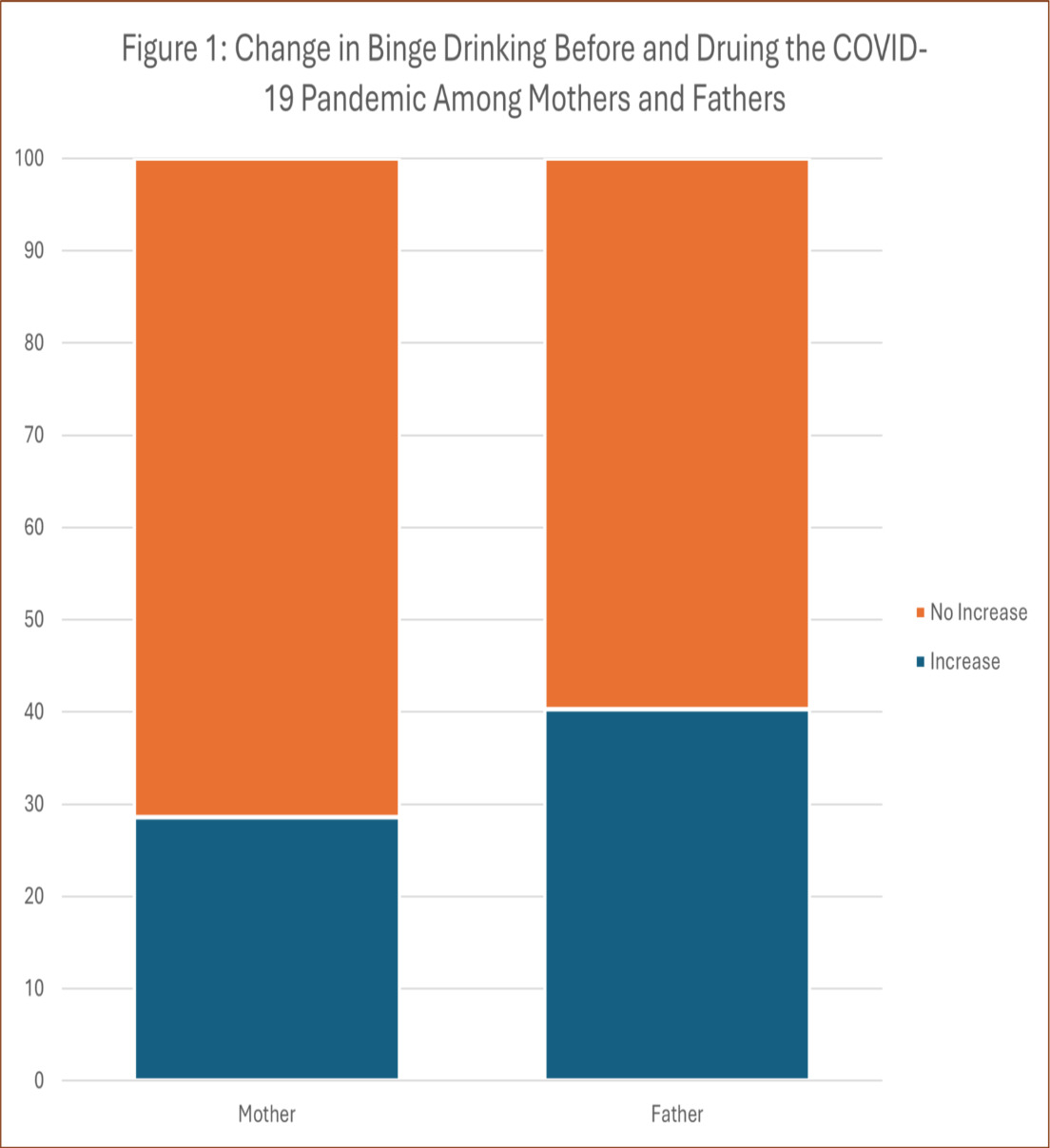
mothers and fathers. Figure 1 presents the rates at which mothers and fathers increased their binge drinking during the pandemic compared to before. Tables 2, 3, and 4 present analyses regressing the predictors on binge drinking frequency during the pandemic for all parents, mothers only, and fathers only. In multiple-variable analyses, Model 1 regressed each predictor on the dependent variable, pandemic binge drinking, at the zero-order. Model 2 examined the sociodemographic variables and pandemic-related parenting demands. Model 3 added pre-pandemic parenting responsibilities, having children under age 12, and the number of children. Model 4 added employment decline.
Results
Descriptive Statistics
Table 1 presented the descriptive results for the independent variables and dependent variables for all parents, mothers, and fathers. Prior to the pandemic, the mean score for binge drinking (ranging from 0 days to 28 days of binge drinking) was 1.17, 0.84, and 1.85 days for all parents, mothers, and fathers, respectively. During the pandemic, the mean scores for binge drinking were (ranging from 0 days to 30 days of binge drinking) significantly greater, with mean scores of 2.25, 1.77, and 3.26 days for all parents, mothers, and fathers, respectively.
Regarding the independent variables, the mean score for pandemic-related parenting demands was 11.52 (range 6-25), with mothers (mean = 11.84) reporting significantly higher scores compared to fathers (mean = 10.95). Among parents, 58.03% experienced employment decline, with mothers (61.19%) compared to fathers (52.66%) reporting a higher percentage of declines in employment during the pandemic.
Turning to pre-pandemic variables, the mean score for pre-pandemic parenting responsibilities was 11.05 (range = 4-18) with mothers (mean = 11.19) reporting almost identical scores to fathers (mean = 10.77). Similarly, the percentage of children under age 12 and number of children were relatively consistent among the parent, mother, and father samples. Finally, regarding sociodemographic characteristics, 32.14% were fathers and 67.86% were mothers, and the mean age was 34.27. About 20.08% of parents had a high school degree or less, 45.24% had some college, and 34.67% completed college or more. Regarding union status, 23.68% reported being single/dating, 16.70% were cohabiting, and 58.34% were in marital unions. Race/ethnicity of parents was 65.96% White, 21.35% Black, and 12.68% Hispanic.
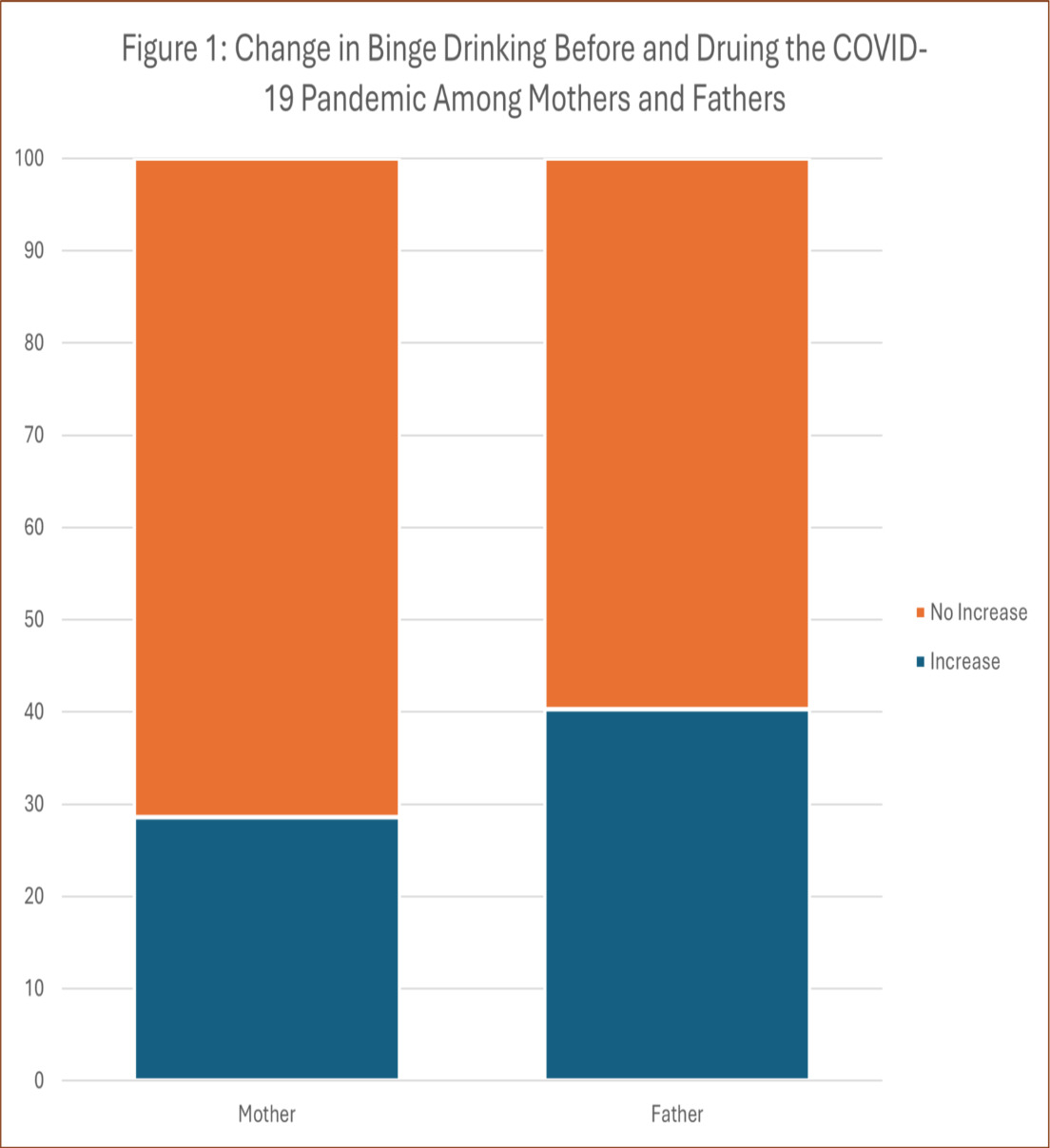
Figure 1 examined increases in binge drinking among mothers and fathers before and during the pandemic. Roughly 40% of fathers reported increases in their binge drinking, compared to roughly 28% of mothers.
Multiple Variable Results
Table 2 examined the frequency of binge drinking among all parents. In Model 1, drinking before the pandemic, pandemic-related parenting demands, and pre-pandemic parenting responsibilities were associated with more binge drinking during the pandemic, while being a mother was associated with less binge drinking. In Model 2, the sociodemographic variables as well as pre-pandemic binge drinking and pandemic-related parenting demands were examined in relation to pandemic binge drinking. Pre-pandemic binge drinking and pandemic-related parenting demands were significantly related to greater frequency of pandemic binge drinking. In Model 3, the variables measuring pre-pandemic parenting responsibilities, having children under 12, and the number of children were added to the model. Pre-pandemic binge drinking and pandemic-related parenting demands retained their significant, positive relationship with binge drinking, while being a mother became significantly associated with less binge drinking. None of the measures added in this model were statistically significant predictors of parents’ pandemic binge drinking. Cohabiting lost its significance. The variable measuring employment decline was added to Model 4. While pre-pandemic binge drinking and pandemic-related parenting demands retained their significant, positive relationship with binge drinking and motherhood retained its significant, negative relationship with binge drinking, employment decline was not significantly associated with parents’ pandemic binge drinking.
Table 3 examined the frequency of binge drinking among mothers. In Model 1, cohabiting, pre-pandemic binge drinking, pandemic-related parenting demands, and pre-pandemic parenting responsibilities were significant indicators of greater frequency of binge drinking during the pandemic at the zero-order. In Model 2, the sociodemographic variables as well as pre-pandemic binge drinking and pandemic-related parenting demands were examined in relation to pandemic binge drinking. Similar to Table 2, cohabiting, pre-pandemic binge drinking, and pandemic-related parenting demands were significantly related to greater frequency of binge drinking during the pandemic. In Model 3, the variables measuring pre-pandemic parenting responsibilities, having children under age 12, and number of children were added to the model. While none of these model-specific variables were significantly related to mothers’ binge drinking, cohabiting, pre-pandemic binge drinking and pandemic-related parenting demands retained their significant, positive relationship with pandemic binge drinking. In Model 4, the variable measuring employment decline was added to the model. Similar to findings for all parents in Table 2, while employment decline was not significantly associated with mothers’ binge drinking, cohabiting, pre-pandemic binge drinking, and pandemic-related parenting demands retained significance.
Table 4 examined the frequency of binge drinking among fathers. In Model 1, pre-pandemic binge drinking was significantly associated with greater frequency of binge drinking during the pandemic at the zero-order. In Model 2, the sociodemographic variables as well as pre-pandemic binge drinking and pandemic-related parenting demands were examined in relation to pandemic binge drinking. Pre-pandemic binge drinking was significantly related to greater frequency of pandemic binge drinking, while the other variables did not yield any significant relationship with binge drinking. In Model 3, the variables measuring pre-pandemic parenting responsibilities, having children under age 12, and number of children were added. None of these measures were significant predictors of fathers’ binge drinking. Pre-pandemic binge drinking retained its significant, positive relationship with pandemic binge drinking. In Model 4, employment decline was added to the model. In this final model for fathers, only pre-pandemic binge drinking retained its significant, positive relationship with pandemic binge drinking, while employment decline was not a significant indicator of pandemic binge drinking.
Discussion and Limitations
This study examined changes in binge drinking during COVID-19 and whether pandemic-related parenting demands were associated with pandemic binge drinking, among all parents, mothers, and fathers separately. We found mothers reported fewer increases in binge drinking compared to fathers. Thus, we did not find support for the first hypothesis that mothers would report more increases in binge drinking during the pandemic compared to before, though this finding is consistent with prior literature finding that while women are increasing their levels of binge drinking, men still binge drink more (Grucza et al., 2018; Hasin et al., 2019).
The finding that among all parents, pandemic-related parenting demands were related to significantly greater frequency of pandemic binge drinking supported our second hypothesis. Adding to previous literature (Deacon et al., 2021; Stewart, 2021, 2022; Thorell et al., 2022) that has examined binge drinking behavior among mothers only or among parents without analyzing mothers and fathers separately, we found support for our third hypothesis, which stated that mothers who report more pandemic-related parenting responsibilities would report more pandemic binge drinking than fathers. Specifically, having pandemic-related parenting demands contributed significantly to mothers’ greater frequency of binge drinking, even when controlling for child age, number of children, and pre-pandemic parenting responsibilities. However, for fathers, pandemic-related parenting demands did not contribute to greater frequency of binge drinking during the pandemic. These findings are consistent with prior work finding that mothers reported higher levels of stress during the COVID-19 pandemic due to increased childcare responsibilities (Carlson et al., 2022; Miller, 2020) and that mothers also consumed greater levels of alcohol during this time (Stewart, 2021).
Although our study added to the research on binge drinking among parents during the COVID-19 pandemic, there are limitations. First, the data were concentrated in and around Lucas County, Ohio. Although the demographic characteristics of the data were similar to other regions in Ohio, there are key differences in terms of socioeconomics. Lucas County, Ohio possessed a higher average poverty rate of 18.2% compared to 10.6% in the United States (U.S. Census Bureau, 2024a, 2024b). These findings may not necessarily be generalized to the United States population. Second is that dyadic dating, cohabiting and married unions were not examined (e.g., Biddle et al., 2020; Stewart, 2021, 2022). Future research should examine dyadic-related stressors along with personal vulnerabilities among both partners in relationships. Pietromonaco and Overall (2022) proposed using the vulnerability-stress-adaptation model to examine stress among couples during the COVID-19 pandemic and its effects on relationship stability. Future research may benefit from extrapolating the use of this model to examine binge drinking and other substance use behaviors in dyadic romantic relationships. Third, the pandemic-related parenting demands measure combines behavioral responses, such as yelling at children, with situational stressors, such as difficulty keeping children under control and difficulties with homeschooling. Although these measures produced an acceptable Cronbach’s alpha of .76, future research may benefit from examining situational stressors and behavioral responses as different constructs.
Despite limitations and needs for future research, our study contributes to existing literature in several ways. Longitudinal data allowed for the prospective analysis of binge drinking behavior and changes in that behavior over time resulting from the COVID-19 pandemic and stressors specifically related to caring for children. Our analyses also included an assessment of whether the effect of pandemic-related parenting demands operated similarly or differently for mothers and fathers. Finally, this research expanded on existing literature by demonstrating a multitude of previously unexamined ways by which parenting stressors during a global health crisis may contribute to binge drinking.
Conclusions and Future Implications
The findings presented here suggest that clinicians, human services professionals, and other service providers working with individuals at risk for or who are currently engaging in alcohol misuse and abuse may best assist those clients who are also parents in initiating and maintaining safer alcohol use practices or abstinence and sobriety from alcohol by paying attention to those life stressors specific to parenthood, in addition to more generalized stressors. This suggestion is consistent with prior research arguing that personalized stressors are more closely associated with desires or cravings for addictive substances compared to more general or standard life stressors (Rutherford & Mayes, 2019). Given that in different-sex partnerships mothers still shoulder significantly more childcare responsibilities than do fathers, parenting-specific stressors may be especially instructive in understanding and reducing or eliminating mothers’ binge drinking behavior (Milkie et al., 2025). Relatedly, substance use counselors and other mental healthcare providers, primary care physicians, and other service providers should be attuned to periods when patients experience elevated levels of stress and increases in caregiving demands. This suggestion is consistent with the present study’s findings that while parenting responsibilities contributed to greater frequency of binge drinking among both mothers and fathers, childcare responsibilities specific to the COVID-19 pandemic had an independent effect in elevating mothers’ binge drinking frequency.
In therapeutic settings, adopting a family systems approach with clients who have substance use disorder and are also parents may be most effective for recovery initiation and maintenance. A family systems approach recognizes that alcohol use disorder, in addition to many other health-harming behaviors, is a product of or can be influenced by dynamics within the family and that all members of the family are likewise influenced by the client’s alcohol use (Steinglass, 1984). Key components of family systems approaches in substance use therapy include psychoeducation about addiction and recovery, developing problem-solving and communication skills within the family, enhancing social support networks for the client and individual family members with outside supports, and providing ongoing support and referrals (SAMHSA, 2020). Based on the present study’s findings that parenting demands increase risk for binge drinking, for two-parent families or in households where more than one adult is present, helping family members enhance their communication skills about individual needs and shared responsibilities may be particularly important. Given that mothers shared the majority responsibility for childcare and housework both before and during the COVID-19 pandemic (Milkie et al., 2025), it may be necessary to empower mothers to communicate with other members of the family unit when they need support and assistance with these duties in order to prevent or reduce mothers’ binge drinking behavior.
Consistent with a family systems approach that emphasizes connecting clients and their families with outside support to enhance social support networks, providers must remember that while large-scale crises like the COVID-19 pandemic may highlight and widen gaps in family resources, these events did not create them and the gaps will not disappear once the crisis is over. For parents who lack resources, their children’s education and supervision are often of primary concern. As such, human services professionals working within clinical, social work, and education settings may need to broaden their scope of attention beyond the challenges and strengths that exist within the family unit and connect parents with outside supports that help reduce parenting demands and stressors, and therefore also reduce the stressors that may result in binge drinking and other health-harming behaviors. Among these outside supports and services are free or reduced childcare, government vouchers for children’s educational expenses, afterschool or in-home tutoring support, connections to education and job training programs for parents, and parent referrals to government assistance programs for food, utility and housing (Casey Family Programs, 2025). This suggestion is also in line with Bronfenbrenner’s social ecological framework and multisystemic therapeutic (MST) approaches (Zajac et al., 2015) that recognize individuals’ behaviors are influenced directly and indirectly by the multiple systems in which they are embedded. For families dealing with co-occurring issues beyond a parent’s binge drinking, MST that employs a home-based model and delivers services in the spaces where problems occur may be especially effective in initiating and maintaining substance use recovery by removing common barriers to treatment, including transportation problems, lack of childcare, and restricted hours of operation, all of which tend to be more commonly reported as treatment barriers by women compared to men (Mejia et al., 2024).
When developmentally- and age-appropriate, human services professionals should also incorporate clients’ children in substance use treatment. One of the earliest studies to assess a family systems approach for mothers with substance use disorder that incorporated minor children within their care found significant success. For alcohol-, cocaine-, and marijuana-using mothers specifically, incorporation of children in the treatment program resulted in faster declines in use, which in turn was posited to result in quicker physical and mental health improvements that reinforced continued change (Slesnick & Zhang, 2016). Relatedly, parental and interpersonal stress, including that which is related to parent-child interactions, has been associated with a greater risk of substance use relapse (Slesnick & Zhang, 2016). Thus, a family systems approach that focuses on developing and enhancing positive communication skills between parents and children is also likely to reduce risk of alcohol misuse relapse. This suggestion is consistent with the present study’s finding that pandemic-related parenting demands contributed to greater frequency of binge drinking among mothers above and beyond general parenting responsibilities. Specifically, the measure of pandemic-related parenting demands included such items as parents having trouble keeping their children under control and yelling at their children. Finally, given the connections between parents’ substance use and later problematic outcomes for children (Barrett et al., 2024; Kaufman-Parks et al., 2024; McGovern et al., 2023; Slesnick & Zhang, 2016), the incorporation of minor children in parents’ substance recovery efforts may also serve to reduce the risk of deleterious outcomes for children across the life course, including their own propensity for alcohol misuse, abuse, and disorder.
Although the present study’s analysis was on how parenting demands during a global pandemic specifically affected parents’ binge drinking, the findings can be extrapolated to demonstrate how any period of elevated stress, whether occurring at the macro- or micro-level, that also increases parenting demands and stressors can increase risk for health-harming behaviors, including but not limited to binge drinking. By being attuned to when these elevated periods of stress occur for clients at risk for or currently dealing with substance use disorder, actively involving family members in initial and ongoing treatment efforts, and connecting clients with additional resources and social support networks, human services professionals may not only reduce substance use behavior for their clients, but also positively impact the family units and communities in which they are embedded.